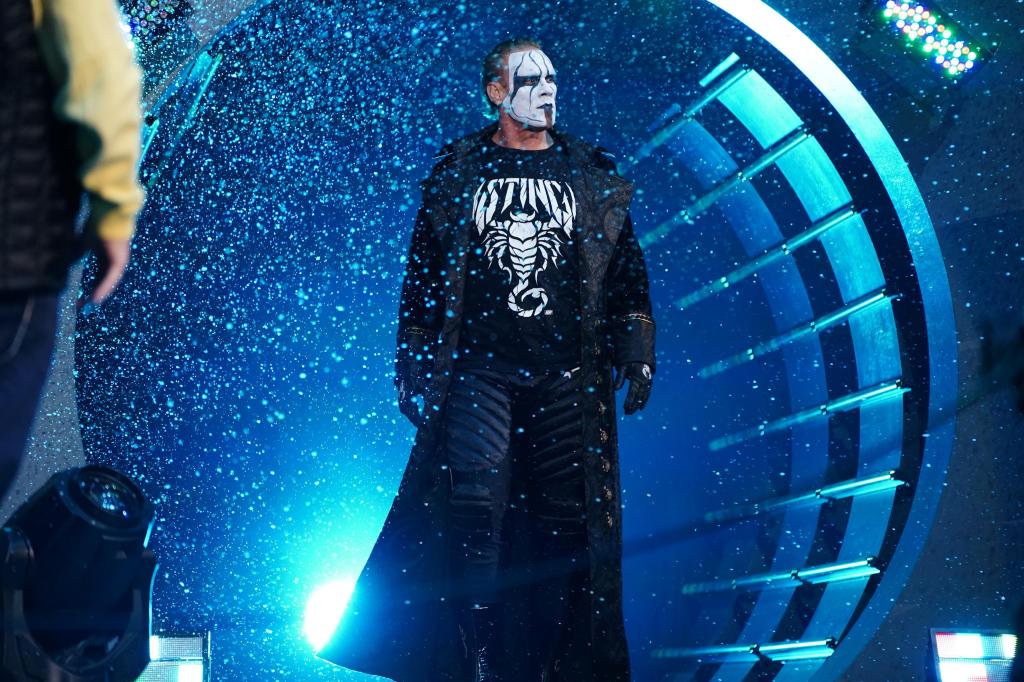
My Earliest Memories: Sting in WCW
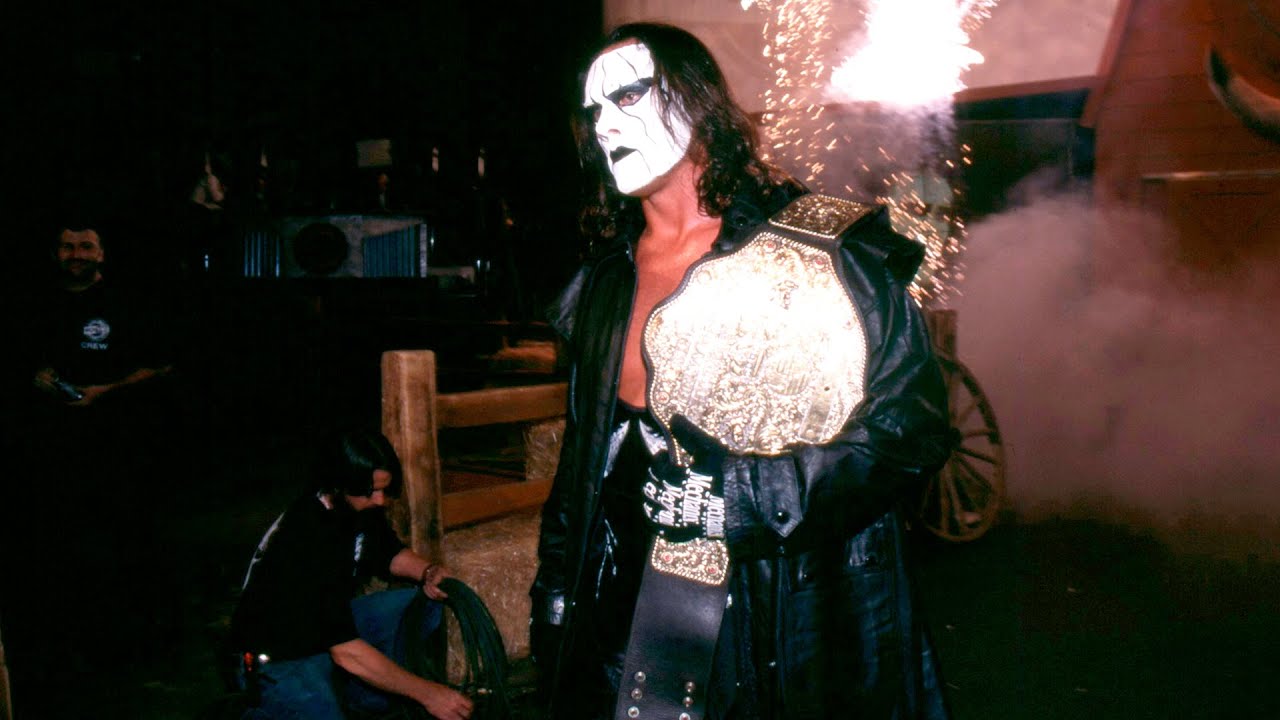
Growing up as a wrestling fan during the Monday Night Wars, there were always two distinct images of wrestling in my memory. One was a distinct memory of Stone Cold Steve Austin laying Sgt. Slaughter out with a Stone Cold Stunner on Monday Night Raw as we saw the Ringmaster develop into the rebellious Rattlesnake. The other predates this, however, as my first exposure to pro-wrestling was through WCW Monday Nitro.
My earliest wrestling memories go to back to a man with short, dark hair, his face painted in many colors as he entered the ring to entertain the audience that cheered him what seemed nearly endlessly. A man who later declared himself a free agent from WCW as a result of what seemed like the locker room and that very same audience doubting his intentions as WCW went to war with the NWO. This man was Sting, and he has been one of the earliest influences for my love of professional wrestling.
From my childhood, Sting’s distinctive facepaint and manner of carrying himself left an indelible impression. He was an energetic beacon for the company before donning the black-and-white facepaint of “The Crow” to go from a symbol of heroism to a symbol of fear, but in everything he had done, Sting had proven to be a man of conviction and loyalty. Before donning the black-and-white facepaint that has become synonymous with him, he had famously spoke to those who believed he had joined the NWO and the audience at large, saying that for those who “never doubted the Stinger”, he’d stand by them just as they had stood by him. From the first day I saw him on-screen, I had never doubted the Stinger.
The war with the NWO produced the most striking visuals of Sting that will remain in my memory as a wrestling fan. The image of a dejected Sting watching from atop the rafters, his facepaint no longer bearing its signature colorful visage. The visual of Sting putting his WCW allies through a trust test, handing them his now-trademark black baseball bat and turning his back to them. Sting rappelling down from the rafters as the NWO began to overwhelm WCW. The once-boisterous Sting now silently doling out his brand of justice against an invading force that sort to end the company that he held dear. I had never doubted the Stinger.
Sting’s feuds with the likes of “Hollywood” Hulk Hogan, Randy Savage, Diamond Dallas Page, Goldberg, and Vampiro remain etched in my memory as fond notes of the man who shaped my love of the media. Through his time in WCW donning the multi-color, black-and-white, or even red-and-black facepaint, he served as WCW’s Icon. When WCW folded in 2001, I was anxious to see what would happen. Watching the Invasion angle play out on WWE programming without Sting felt like such a crucial piece was missing as WCW’s defender was nowhere to be seen, but still, I never doubted the Stinger.
An Alternative: Sting in TNA
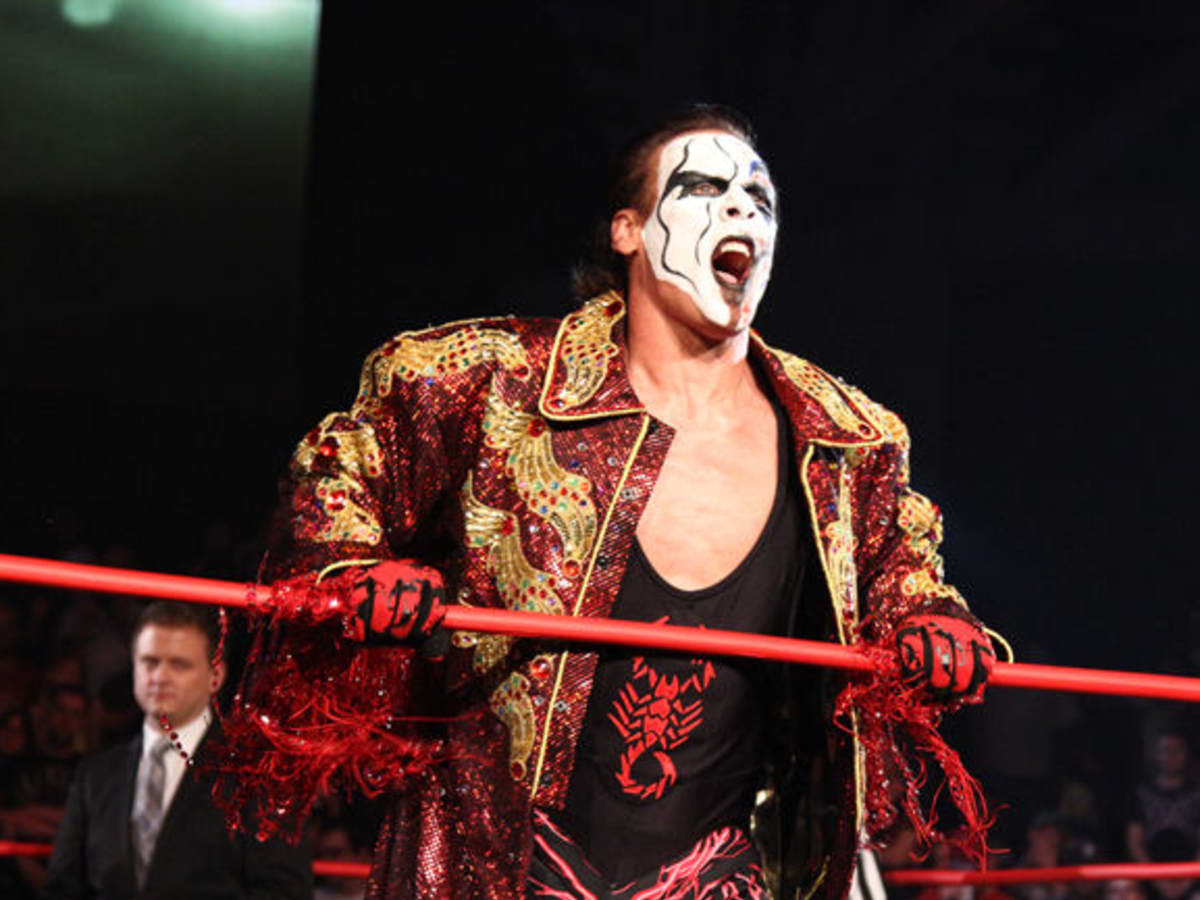
In 2005, I was finding myself looking for an alternative to WWE. The programming, while still enjoyable at points, was starting to grow stale in other sections, so I was beginning to become curious about other wrestling companies and their availability. It was around this time that my household received an advertisement for a wrestling show called “TNA Impact” on Fox Sports Net.
The advertisement had a mixed crew of wrestlers I either recognized, vaguely remembered, or would soon be introduced to by watching the weekly program. During that time, the potential for TNA to grow was very visible, and people like Christian Cage making their way to the company helped the promotion feel bigger. As the calendar turned to 2006, TNA would tease their newest signing with the signature scorpion of WCW’s Icon. It was a lightning bolt of energy within TNA in my eyes. After all, I never doubted the Stinger.
As soon as I saw Sting in a TNA ring for the first time, it made it seem like the potential TNA had to grow was truly being met. A legend the status of Sting making their way to TNA and eschewing WWE at the time felt massive, and Sting’s impact in the company felt palpable. Through his time in TNA, we saw Sting take on various new looks and forms in his character, whether it was Bound for Glory 2006 where Sting merged aspects of his old “Venice Beach Surfer” with the “Crow” and even the color scheme of the Wolfpac’s red-and-black, his role in the Main Event Mafia two years later in a power struggle with Kurt Angle, or even a character turn reminiscent and seemingly inspired by Heath Ledger’s Joker. Despite having done it all, the Icon continued to reinvent himself to stay fresh in the eyes of the wrestling world, and still, I never doubted the Stinger.
Answering the What-If: Sting in WWE
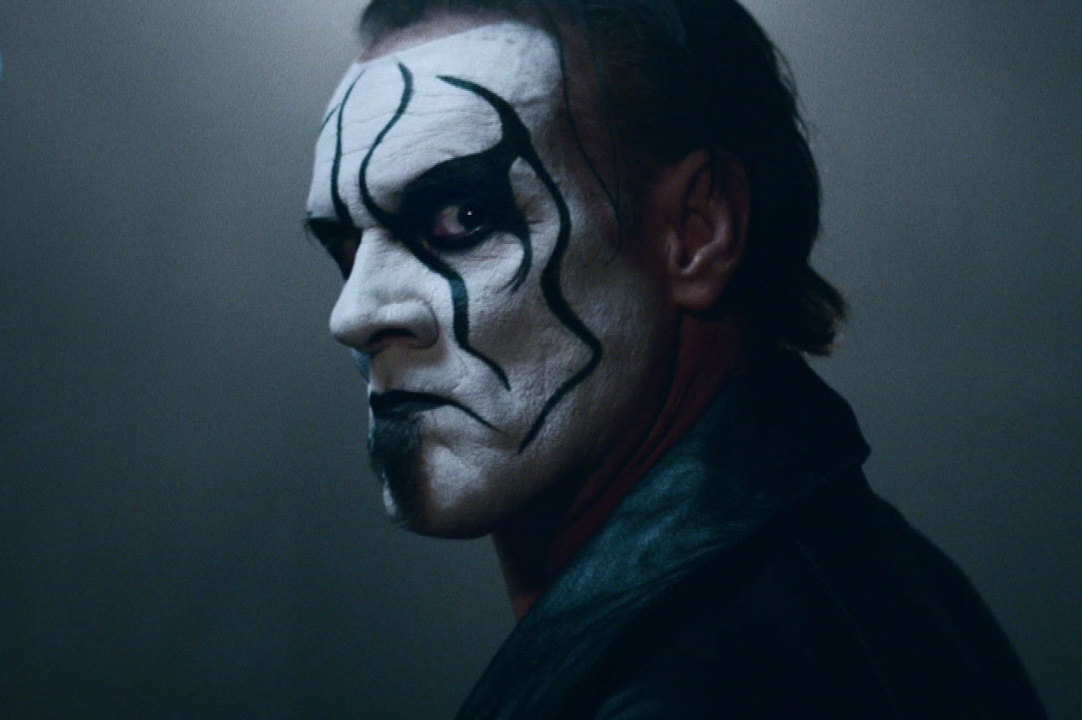
By 2013-2014, the TNA that had began in 2002 had slowly ceased to be as TNA Originals were slowly being phased out or opting to leave the company one-by-one due to various factors. So too did Sting, leaving at the very beginning of 2014, and as Sting left, questions began to circulate regarding his future. As if to answer them, Sting began to be referenced more on WWE broadcasting and the company’s own website. A faint glimmer of a chance was there: What If? No matter what happened, I never doubted the Stinger.
When Sting made his first official WWE appearance as part of a WWE Network tribute to the Ultimate Warrior, I thought nothing of it. After all, I had learned that Sting was Warrior’s tag team partner before the days of WCW as the Blade Runners. Paying tribute to his old tag-team partner seemed customary. But…there was an unshakable air about it all. What If? Once more, I never doubted the Stinger.
It wasn’t long after this appearance that Sting began making promotional appearances for the WWE. Sting merchandise was made, a DVD was produced, an action figure was put into production…Perhaps the biggest surprise came when, on an episode of Monday Night Raw, a video played showcasing an orchestra donning Sting’s signature face-paint performing his entrance music from WCW. It was a moment that sent chills through my spine as a lifelong fan…only for it to be revealed as a promotional vignette for WWE 2K15, with Sting as a special pre-order bonus. Shock and enthusiasm became disappointment…but then, the question lingered. The previous year, the Ultimate Warrior was the special pre-order bonus, and it proved to be the first signs of a bridge being mended between WWE and Warrior. So…what if…? Still, I never doubted the Stinger.
Months later, at Survivor Series, we finally had our answer. The Authority, led by Triple H, had threatened to exercise full, tyrannical control of the WWE, and in what would be the closing moments, WCW’s Vigilante stood before the injustice caused by the Authority. The “What If” had finally been answered by an immediate wrench in Triple H’s plans in a moment I thought I’d never see. The surreal nature of Sting in a WWE ring standing opposite of Triple H was one I couldn’t shake, but I never doubted the Stinger.
While the dream match in my mind (And the minds of others) was Sting vs. the Undertaker, Sting was put up against Triple H and the Authority. In a way, it was a fitting role for Sting, battling against the invasive force that threatened to tear a fabric of professional wrestling apart. It put Sting in a facsimile of the role he had made his own in WCW. Sting vs. Triple H at Wrestlemania was also an enormous match in its own right. I had no reason to doubt the Stinger.
Then it happened. Sting went into Wrestlemania 31, and the narrative became “WCW vs. WWE”. The match involved Triple H bringing DX to his aid while Sting sought the help of the NWO that he fought against years ago. Then, in a surprising finish, Sting lost. Sting had fallen to Triple H, but his war hadn’t finished yet. He targeted the Authority’s “Diamond” Seth Rollins months later for his WWE World Heavyweight Championship. The odds were against him, but still, I never doubted the Stinger.
In a match that remains in my mind as one of the most worrying sights I’ve seen in the ring, Sting’s momentum ground to a halt once Rollins landed a Buckle Bomb. This was…different. It was as if Sting was swimming through the air, struggling to get through the match. It was a harrowing sight to take in, the wrestler who had effectively opened the door to my wrestling fandom being taken into an ambulance with what would be diagnosed as the effects of cervical spinal stenosis, a diagnosis that forced Sting into retirement, a legendary career having come to an end…or did it?
Sting had opted to not go in for neck surgery as the procedure would definitively end his career, despite WWE forcing Sting into retirement with his Hall of Fame induction in 2016. However, Sting’s most pointed statement came when he said that it “wasn’t Goodbye. This is ‘See Ya Later’”. On the surface, it seemed strange. With a severe neck injury, would he really…? I was left asking the question once again: What If? With no reason to do so now, I refused to doubt the Stinger.
One Last Revolution: Sting in AEW
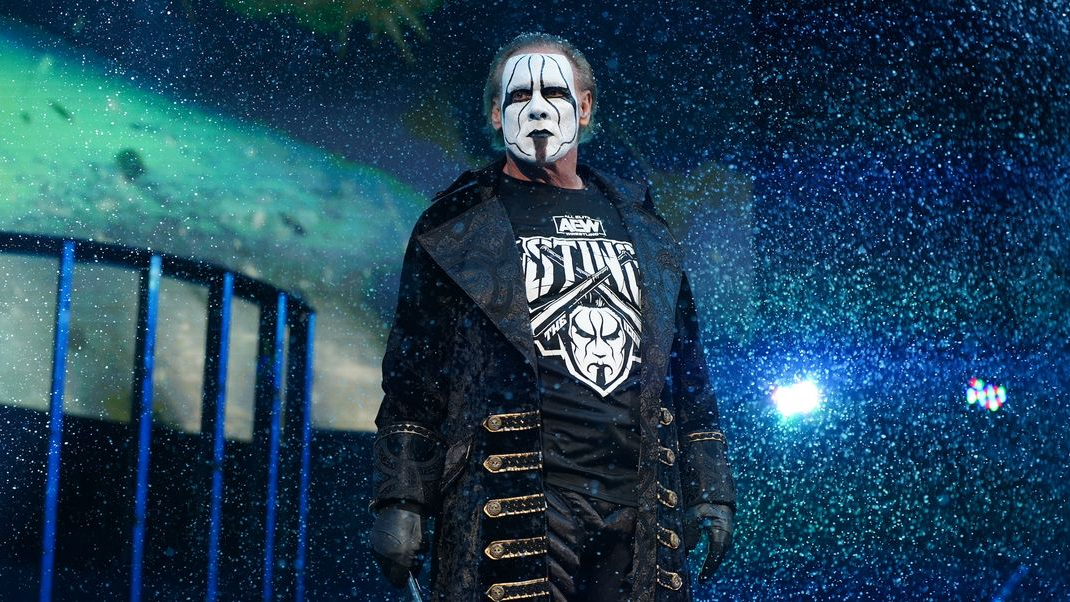
In 2019, a new company called “AEW” was founded by Cody Rhodes, Kenny Omega, the Young Bucks, and Tony Khan as a new alternative in the field of professional wrestling. Another new company had taken hold with a much stronger start than almost any other. There seemed to be a need for veterans on the roster, and Cody Rhodes himself had long been a fan of Sting growing up…What If?
Only a year into the company’s foundation, Sting made his appearance at the Winter Is Coming special episode of Dynamite in 2020, making the save for Arn Anderson, the Rhodes Brothers, and the young skateboarding, face-painted wrestling prodigy named Darby Allin, immediately forming a connection with the enigmatic performer…but would Sting really get physical in the ring again? Would he be able to perform for an audience again at 60 years old after a severe neck injury? What If…? Sting had refused the initial surgery in the hopes of doing just that, and I still didn’t doubt the Stinger.
Sting would wrestle his first match with AEW at AEW Revolution in 2021, opting to go with a cinematic style match that was pre-taped and added more flourish through the use of editing and camera work. Regardless, I was excited. To see Sting move as he did, even if it was a pre-taped, edited contest, was a relief after the heart-wrenching collapse six years prior. Now that Sting had done a cinematic style match…would it be possible for him to do a full match in front of an audience? The “What If” lingered, but I never doubted the Stinger.
Only two months later, Sting and his new protege in Darby Allin competed at Double or Nothing in a tag match in front of a live crowd. Sting’s first live match in front of a crowd in six years. Would it deliver? Would it live up to any sort of expectation? To say that it did would be an understatement, with Sting seemingly turning back time in an instant. Taking a suplex on the entrance ramp, and then standing right back up as his opponent, Scorpio Sky, celebrated, throwing him down to the floor, and then, taking his shirt off and throwing it into the crowd before diving on his opponents. I was taken back to my childhood, jaw on the floor, smiling from ear to ear. Here was the man who introduced me to wrestling some 25 years ago diving on top of his opponents not six years after a forced retirement. I was still that little kid that never doubted the Stinger.
Sting appearing on TNT, the same channel that aired WCW Monday Nitro (And later, TBS, the home of WCW Thunder) in my childhood with Tony Schiavone providing the soundtrack to his return to wrestling felt…right. Comfortable. Nostalgic in the best way while giving Sting an opportunity to end his career on his own terms. From Sting’s first match at AEW Revolution 2021 to his final match at Revolution 2024, Sting was able to go out there and do what others said he wouldn’t be able to do again. One match led to another. Sting’s interactions and partnership with Darby Allin grew, both men influencing and encouraging each other through their journey together, and even becoming the AEW Tag Team Champions. One last run with gold. One final way to say goodbye the way he wanted to. AEW Revolution 2024 as the date set for his final bow from the industry he helped me love, and in the nearly 30 years of my own fandom, I had never once doubted the Stinger.
Looking back and filling in the blanks of my original fandom, it’s clear to see the influence of Sting on the wrestling industry today. Seeing the Surfer, multi-colored early days of Sting in NWA and WCW paints a portrait of the archetypical babyface in professional wrestling with energy to burn and charisma in spades. Sting’s transition to the black-and-white facepaint took what made him so effective as a babyface, flipped it upside down, and evolved with an ever-changing television and audience dynamic. Sting’s run in TNA saw the character change, adapt, and add numerous new layers to his persona. In WWE, Sting fought for his convictions against a despotic force once again, revisiting the past under a new guise. In AEW, after being told to sit on the bench, he got back up and fought to become a starting player with a little encouragement from his teammate. Throughout his run, the one thing for sure about the Stinger…was his resolve, and in my many years of wrestling fandom as a child into adulthood, I still, to this day, never doubted the Stinger.
~Fin


Leave a Reply