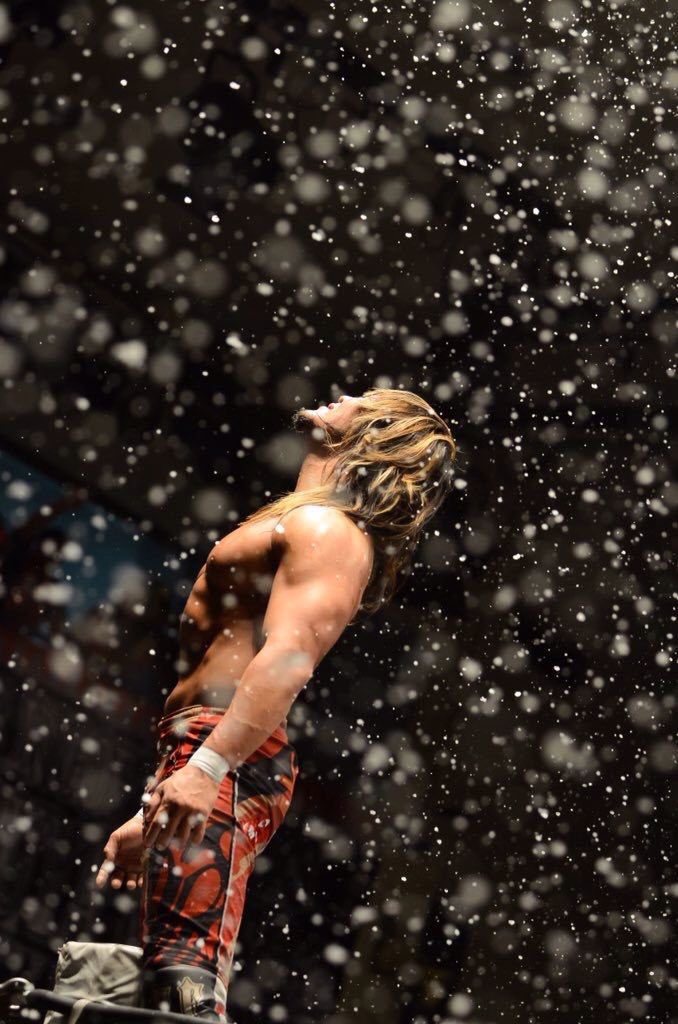
I started and restarted this entry several times in my head. As someone who only started watching New Japan Pro Wrestling in 2014, how exactly could I quantify the impact of Hiroshi Tanahashi on my perspective of the company and the overall product? It wasn’t too long in that thought process that I realized he was an immediate contributor to my renewed love of wrestling as an artform in the 2010s.
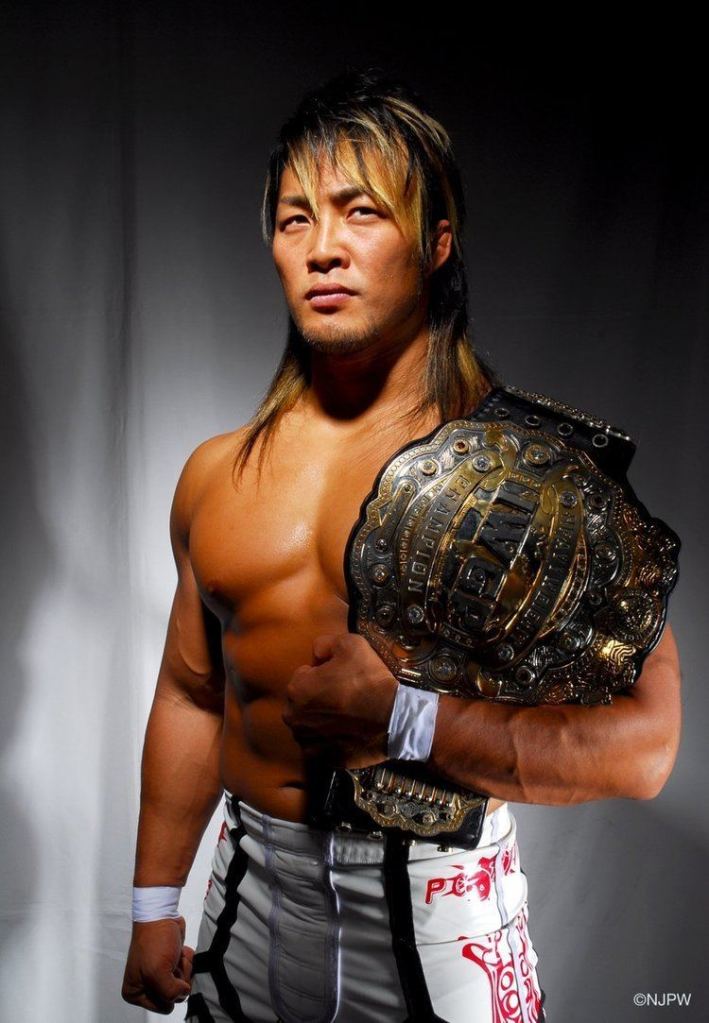
I had been tangentially familiar with Tanahashi through TNA in the 2000s, particularly his clash with AJ Styles at Final Resolution in 2006. Eight years later, I heard the name come up in high regard as my interest in Japanese wrestling grew. Three men stood out: Shinsuke Nakamura, the King of Strong Style; Kazuchika Okada, the Rainmaker; and Hiroshi Tanahashi, now known as The Once-In-A-Century Talent. Little did I know how much all of the aforementioned worlds would collide on my first NJPW show: Invasion Attack 2014.
Invasion Attack 2014 was a landscape-altering event for the company. Prince Devitt, now known as Finn Balor in the WWE, was wrestling his final match for NJPW. Nakamura and Tanahashi were concluding a three-match series dating back to Wrestle Kingdom of that year. AJ Styles had debuted for the company after 11 years of working with TNA and went right for the IWGP Heavyweight Champion Kazuchika Okada. It was an exciting show to catch as my first, but I lacked context for a lot of its happenings at the time. Still, I followed along, enchanted by the characters and personalities on-screen. It wasn’t long before I’d be introduced to my first G1 Climax.
The G1 Climax of 2012 and 2013 were already almost wrestling legend by this point, so I was excited to completely destroy my sleeping schedule to catch the tournament live on all nights. It was the perfect “primer” for an NJPW newcomer, giving you a mix of talent while following up or preparing the next string of stories to carry beyond the tournament. This was where I was hooked. Beyond the spectacular matches through the roster and surface-level story-telling of the Bullet Club looking to tear down NJPW from the inside, the most enthralling dynamic was my first experience in seeing Katsuyori Shibata confronting Hiroshi Tanahashi.
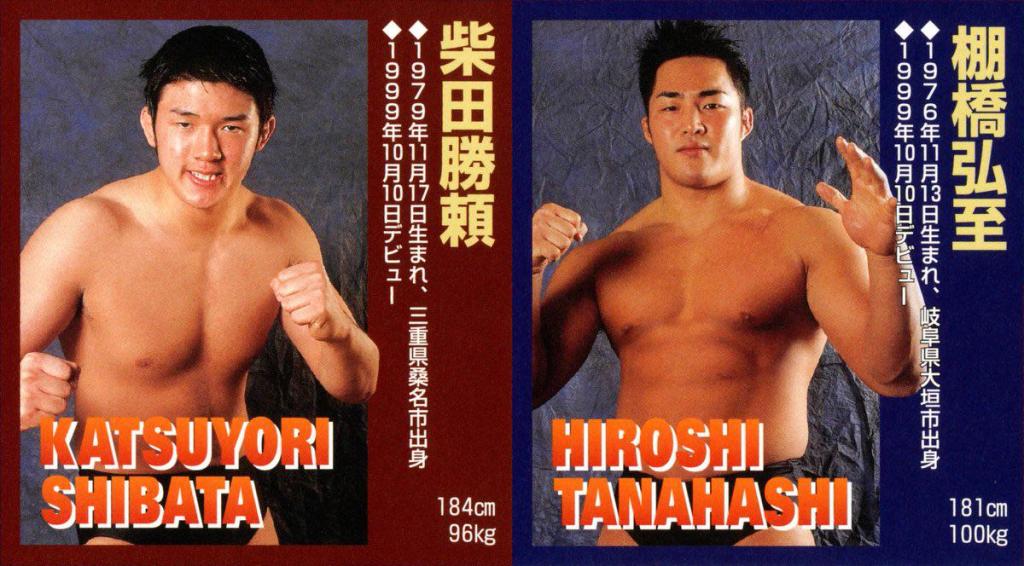
Katsuyori Shibata, the Wrestler. A man who enters the ring in the most simplistic of ring gear compared to Tanahashi’s elaborate, superhero-esque attire of choice. From the immediate onset, I detected two wrestlers who were diametrically opposed in philosophy and presentation. In a group chat, there was an undercurrent of excitement for this match that was contagious. Already, this was the most fury and frustration I had seen displayed from Tanahashi. It was almost uncharacteristic from what little I knew of him, yet it was perfectly within the realms of his persona as I soon discovered.
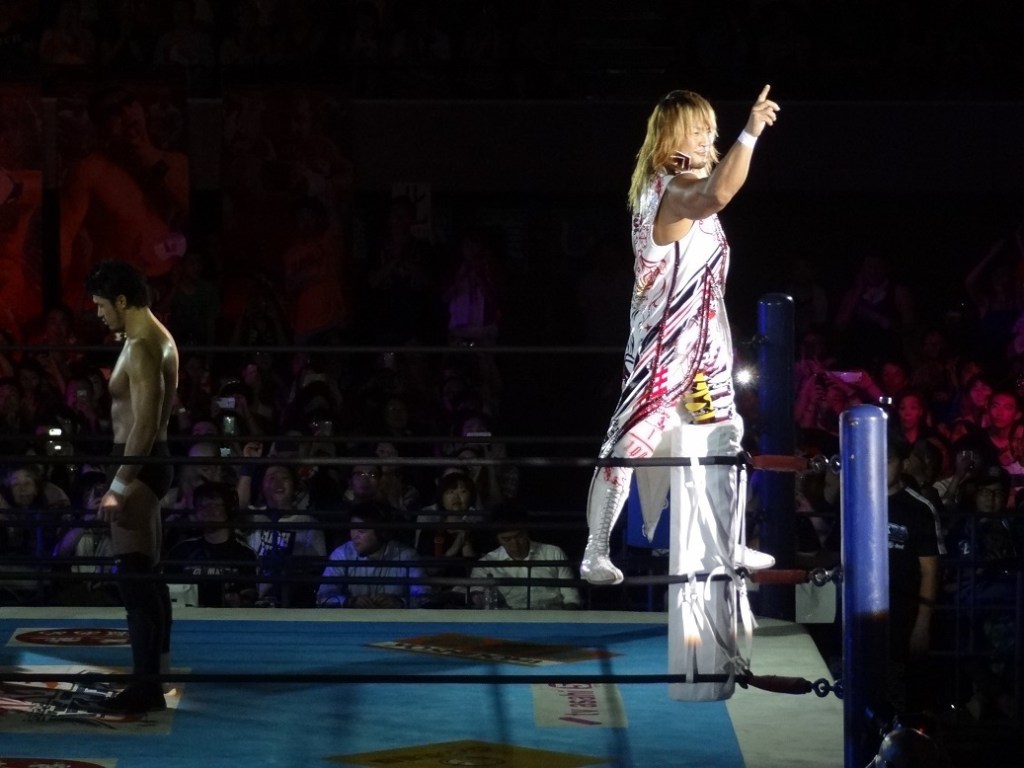
To say Tanahashi/Shibata was the first story that had me engaged in NJPW’s brand of story-telling would be underselling its importance. It was the template that helped me understand the differences in how stories were told in NJPW compared to any other wrestling I had watched by this point. It introduced me to the broader concept of “Three Musketeers” as it relates to NJPW’s ecosystem of talent as well as to the tumultuous relationship NJPW has had with shoot-wrestling and MMA influence through the years. Seeing Shibata, the “Rogue Musketeer”, defeat Tanahashi during the G1 felt huge. This arc of their story culminated at the Destruction in Kobe event with Tanahashi squeezing out one more win, respect earned on both sides, to close the book on their rivalry.
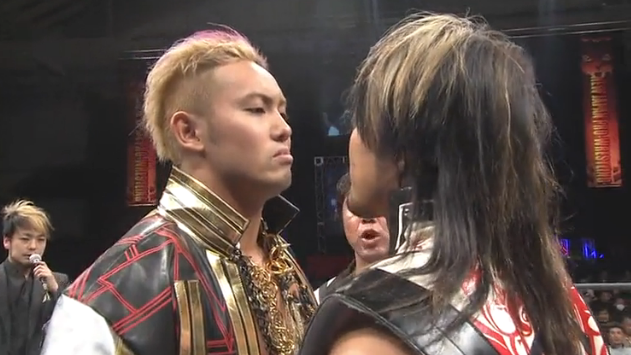
This segued perfectly into the rivalry that defined this generation of NJPW: Kazuchika Okada, winner of the G1 Climax, vs. Hiroshi Tanahashi, the IWGP Champion at Wrestle Kingdom 9. I had been made aware of their numerous battles prior. How the Rainmaker Shock of 2012 was a monumental shift of the NJPW paradigm with a rookie who just returned from excursion (after losing to Tanahashi in his final match before excursion) showcasing themselves as a wrestling prodigy a month later and defeating a record-holding world champion on their first one-on-one encounter. How Tanahashi didn’t respect Okada and how he believed that “the IWGP was out of his reach”. It was a battle on who could carry NJPW forward into the future, and even with them trading wins and losses, it was the battles at Wrestle Kingdom that proved the point. At WK7 and 9, Tanahashi stood tall, even leaving Okada in tears at WK9. WK10 signaled the passing of the torch with Okada defeating Tanahashi for the IWGP Heavyweight Title, securing Okada’s spot at the top.
From here, I understood Tanahashi’s journey as one of rediscovery and reassurance, and I was fully invested. Tanahashi’s demeanor was unbroken, but his need to remind everyone of who he was was on full display, changing his theme music to the song he uses to this day (“Love & Energy”) with the chant of “Go ACE!” echoing through the composition itself even as he fell to Tetsuya Naito at WK11. The Iron Will of the Ace was firmly established. Even in the face of his greatest defeat (and losing at WK again the following year), he was still the Once-In-A-Century Talent. Forever ACE.
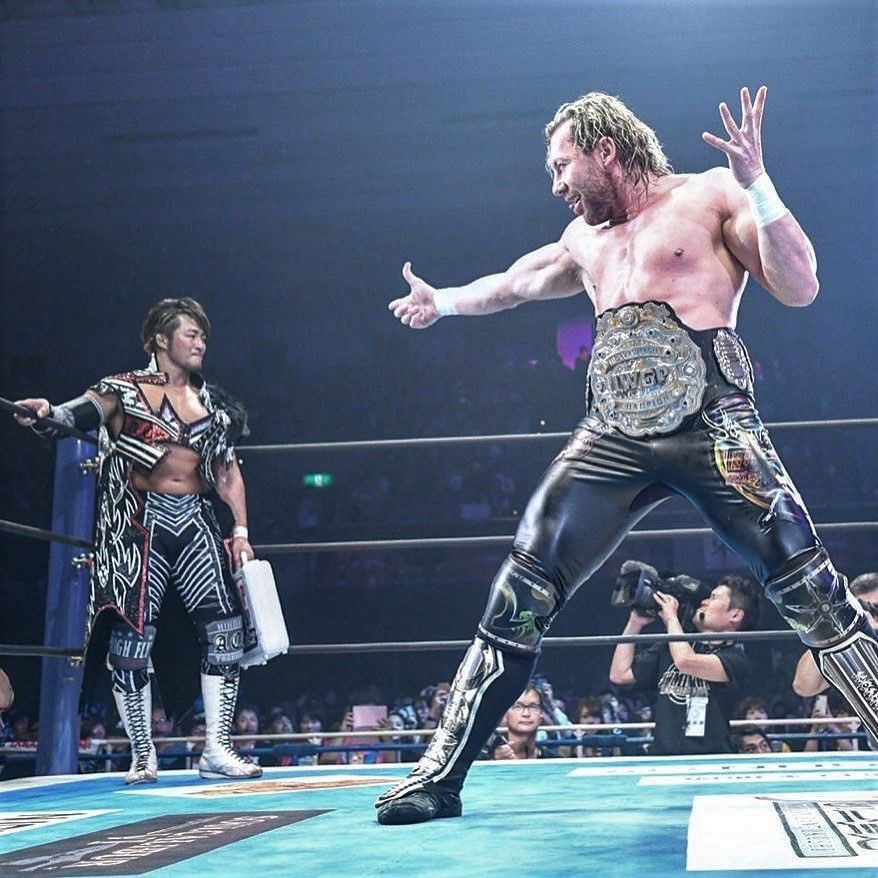
Tanahashi’s sheer heart was solidified before my eyes seeing him win G1 Climax 28 and defeat Kenny Omega at Wrestle Kingdom 13, winning the IWGP Heavyweight Championship one final time in his career and acting as a stabilizing agent for the company as he had been back in 2010. After dropping the title to Jay White, helping to establish one of NJPW’s craftiest villains, Tanahashi’s place in the company fluctuated, and I followed him every step of the way. From NEVER Openweight to Trios Titles to forming tag-teams with his old rivals in Kazuchika Okada to combat bigger threats or fight up-and-coming rookies attempting to take their throne. No matter what was happening, Tanahashi was a foremost focus of my viewing period of NJPW.
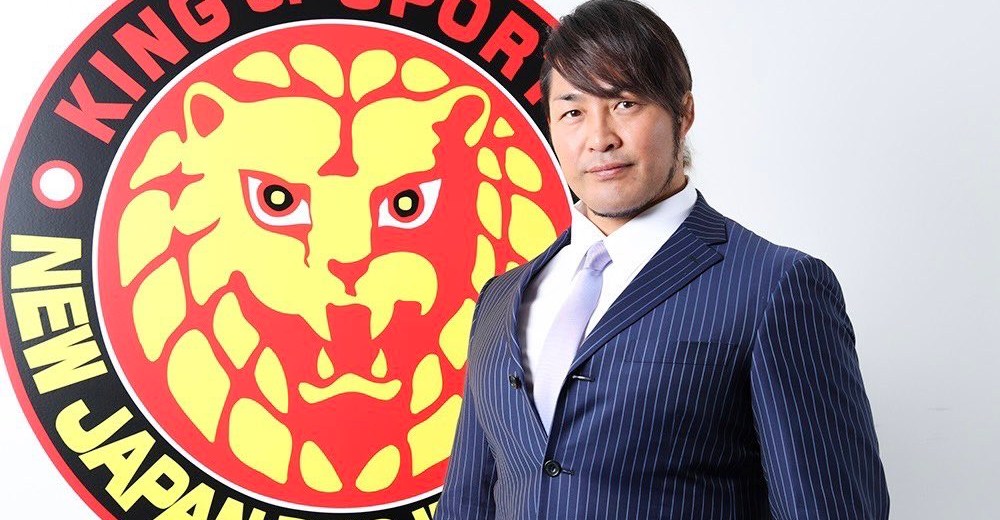
The day Tanahashi was announced as President of NJPW, I knew his retirement was coming closer. His body was slowing down. His schedule can only get so full before something had to give. Yet through all of it, Tanahashi’s dedication to NJPW persisted as both a wrestler and an executive, going so far as to be a presence at the AEW-NJPW Forbidden Door PPV events every year wherever he was needed. Tanahashi eventually announced that Wrestle Kingdom 20 would be his final match, and he spent the entire final year squeezing every last drop he could out of his body.
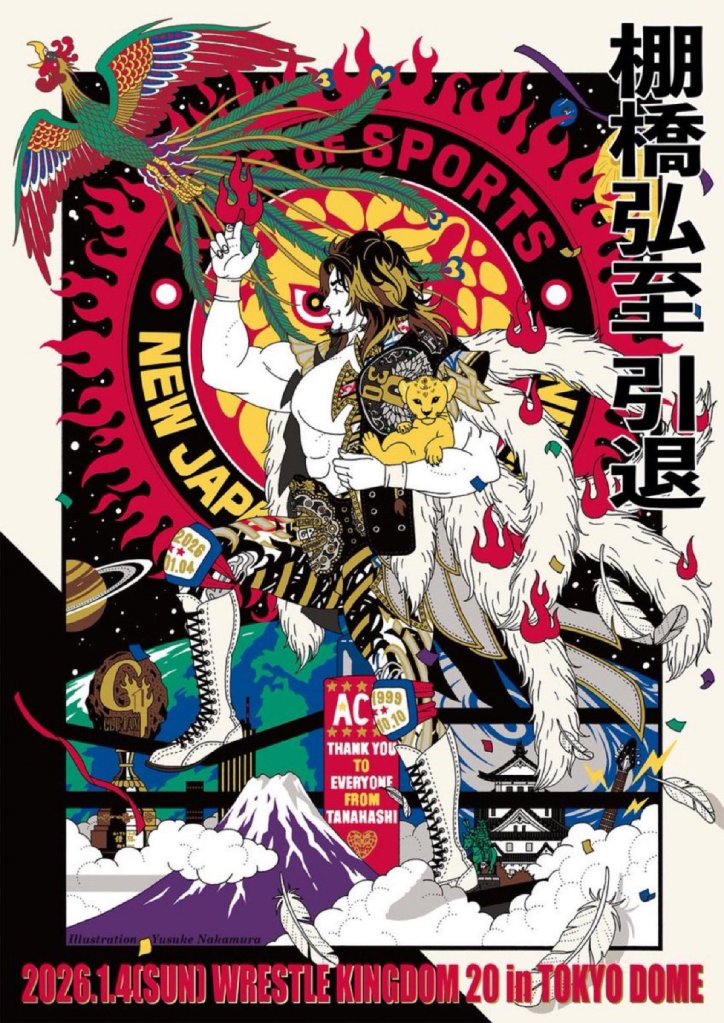
The final year of Tanahashi’s storied NJPW career was akin to the old master who refused to go down and, on occasion, proved that he was more capable than his body would dictate. Heart over body. Mind over matter. One full year of bouts putting this mantra on full display including one last chance at the IWGP World Heavyweight Championship and one more full G1 Climax tournament after skipping 2024. His retirement year epitomized everything that he stood for as a performer as well as a man who carried the company on his back whenever they needed him.
When Shibata left and NJPW began to suffer at the hands of the MMA craze at the time permeating their show, Tanahashi ascended. When Kenny Omega left to help found AEW, Tanahashi stepped up to take the mantle one more time. When the company’s behind-the-scenes turmoil was beginning to lead to a loss of high-end talent, Tanahashi became the President. Now, on his final year, he gave everything he had to the company one more time with almost no more fitting a send-off than Kazuchika Okada at Wrestle Kingdom 20, a decade removed from their final major clash at WK10.
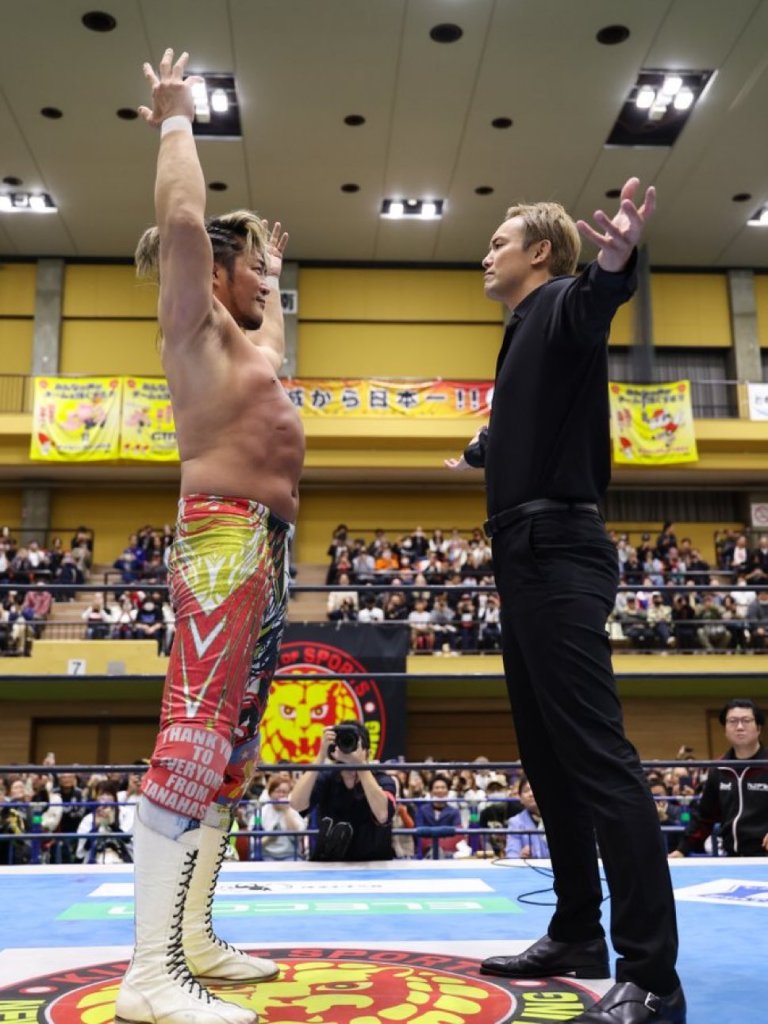
Because I came in about halfway into Tanahashi’s wrestling career in NJPW, so much of his past history has almost become mythologized to me. The story of Scott Hall on his way out of NJPW deciding to put over a young Tanahashi in 2001 feels like the start of a hero’s journey rather than a rookie upstart getting one over on a legend. Tanahashi ascending as IWGP Heavyweight Champion reads like the moment the myth becomes tangible rather than NJPW taking a chance on Tanahashi as a younger talent in the company. Even his noted rivalry with fellow Musketeer Shinsuke Nakamura was a study done in retrospect as if it was a chronicled legend rather than a head-to-head of who wanted the mantle more. Now, it is only fitting that the career of the Ace concludes with the final chapter to be written against one of his most important rivals to bookend what was one of NJPW’s most important rivalries that has also been stamped into near-myth in the modern era.
I wasn’t able to be there at the start of Tanahashi’s rise, but he was there as I started to get into NJPW as a program. He was a constant, reliable element of the show every single time he went out there even sometimes in spite of his own physical state. His story-telling in the ring and the rivalries he forged with people like Shibata and Okada clued me into NJPW’s intricate and longer-term brand of story-telling. Wrestle Kingdom 20 will mark one final sunrise of the Once-In-A-Century Talent, but as that sun sets over the sold-out Tokyo Dome, Hiroshi Tanahashi will be “Forever ACE”. Aishitemasu/愛してます!!!
 Write It In The Ring
Leave a comment